
🔊 Electric Scooter Regulation TODAY! Updated (Official Gazette Summary)
02/12/2025
📌When you look at the development maps of countries, you see a common line: Railway…🚃
18/12/2025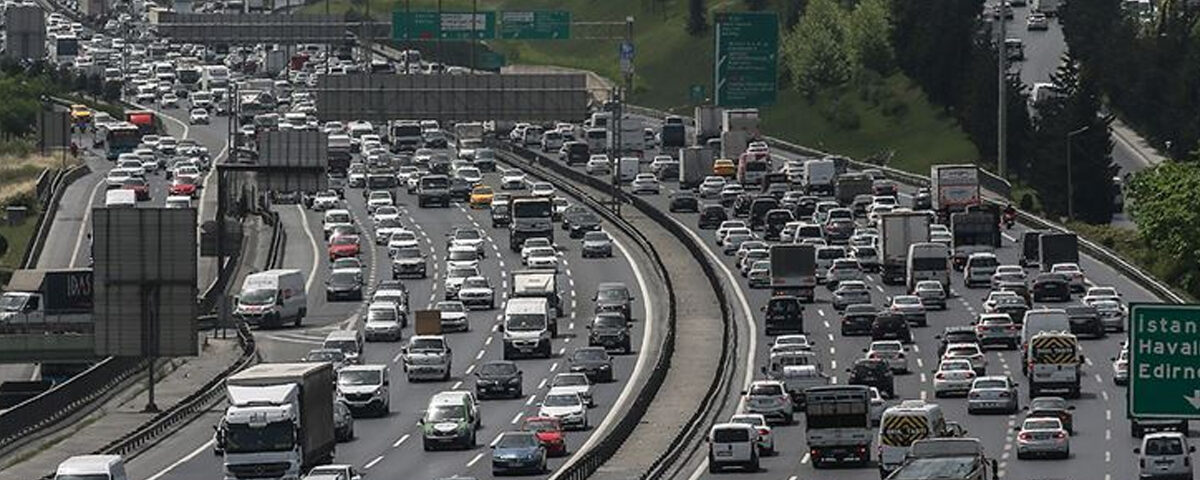
Is the problem the number of vehicles or 🚗 the density of vehicles?
Until today, we have always talked about the total number of vehicles. However, the metric we really need to focus on is something else…
In this study, I examine a concept used for the first time in the industry:
📐 “Number of vehicles per square kilometer”
Because traffic is not about how many vehicles there are; It is explained by how much space the vehicles are squeezed into.
📊 The data is very clear:
🇹🇷 Number of cars per square kilometer in Turkey: 21 (Source: TurkStat)
🇪🇺 Average in 27 European Union countries: 65 (Source: Eurostat)
In fact, Turkey is actually in the low density group compared to Europe.
❗ So the problem is not in Turkey.
🚨 The real problem: Istanbul
🏙️ Number of cars per square kilometer in Istanbul: 698!
This figure is 33 times the average of Turkey and about 10 times the European average.
The issue in Istanbul: not only population growth, not just vehicle ownership.
The main issue is this:
👉 Excessive number of vehicles,
👉 A very limited area
👉 being physically stuck.
📈 Moreover, this pressure continues to increase
The data shows:
🦠 Except for the COVID period, the number of ➡️ cars per square kilometer in Istanbul increases by an average of 5% every year.
This is not like a process that will stop on its own.
If it persists:
🚗 the intensity will increase,
⛔ the jam will increase,
⏳ loss of time, ⚡ energy and 📉 efficiency will become permanent,
🌫️ A much more unhealthy weather environment will be waiting for us.
❓ So can this trend be stopped? It’s not easy…
The first topics that come to mind are:
🚇 Increasing strong and attractive public transportation systems,
🚫 Consciously reducing the use of individual vehicles,
⚡ Encouraging electric, small segment vehicles,
🗺️ Density management policies that consider space use and transportation together.
📌 Agency Analysis:
- The result of the increase in the number of vehicles; Population growth is one of the reasons.
- The fact that the vehicle is considered as an investment, not a need, that the vehicle is still considered as a status symbol, and that the right vehicle choices are not evaluated in purchasing are the facts that make the issue difficult. The priority will be to change these phenomena.
- This is exactly where European cities differ: They managed to manage the vehicle density, not increase the number of vehicles.
- It will not be possible to increase the number of roads in practice. It will not be possible to reverse urbanization in the short term. Managing the existing; It stands as a dressing.
- Civilian users reflexively brought the motorcycle preference to the forefront.
- Increased digital shopping and quick services have accelerated motorcycle traffic, and as a result, more motorcycles than cars were sold in 2024.
What Can Be Done?
- The user prefers a vehicle with the volume of “right need”, not a “big” vehicle.
- Providing incentives and supporting the sales of technologically equipped electric B-segment vehicles suitable for urban use, uncompromising in safety.
- Increasing the prevalence of public transportation and its trust and comfort.
Electrification in motorcycles may become mandatory, especially for companies and people engaged in commercial transportation.