
The reality of microplastics in the automotive industry.
15/07/2026
📹 Digital Witness
17/08/2026
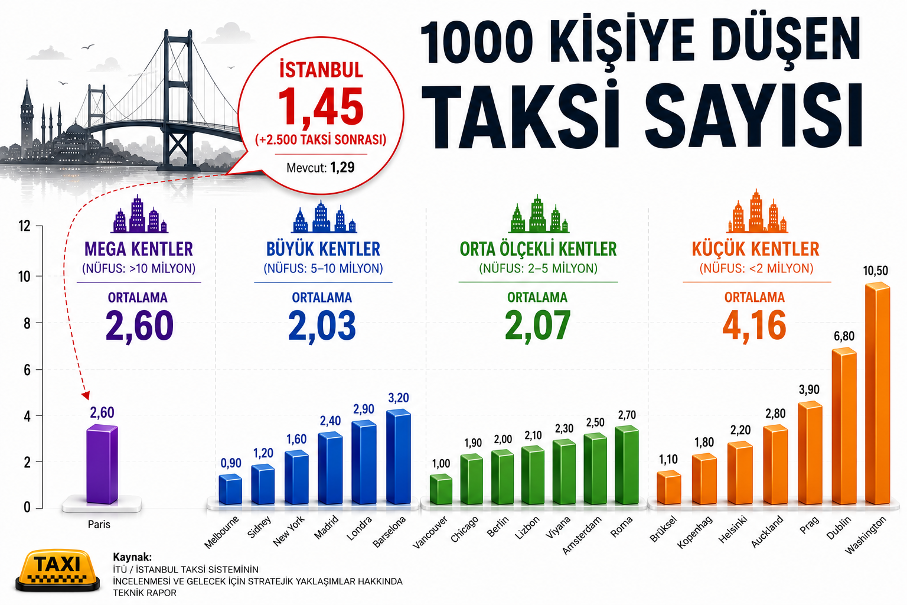
In this study, world cities were evaluated by dividing them into 4 groups according to their population size. The comparison was made on the global unit “number of registered taxis per 1000 people”. (Except Individual Transportation with Reservation)
Some noteworthy results:
📌 Current situation in Istanbul
- There are 1.29 taxis per 1,000 people.
- With 2,500 new taxis, this value rises to 1.45. The increase in recent years is remarkable!
- On the other hand, in the Global Race; Istanbul is in the Mega Cities group with a population of more than 10 million and is behind its rival Paris in the group at 2.60.
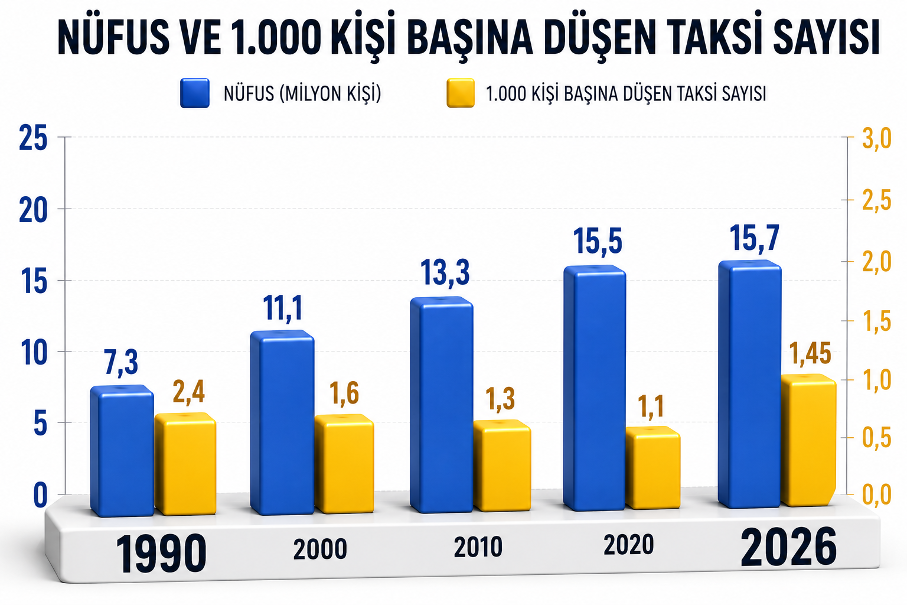
📌 1990-2026 in İstanbul
- The population increased by 115%. (7.3 Million 15.7 Million)
- On the other hand, the number of taxis per 1,000 people decreased by 40%. (2.4 1.45)
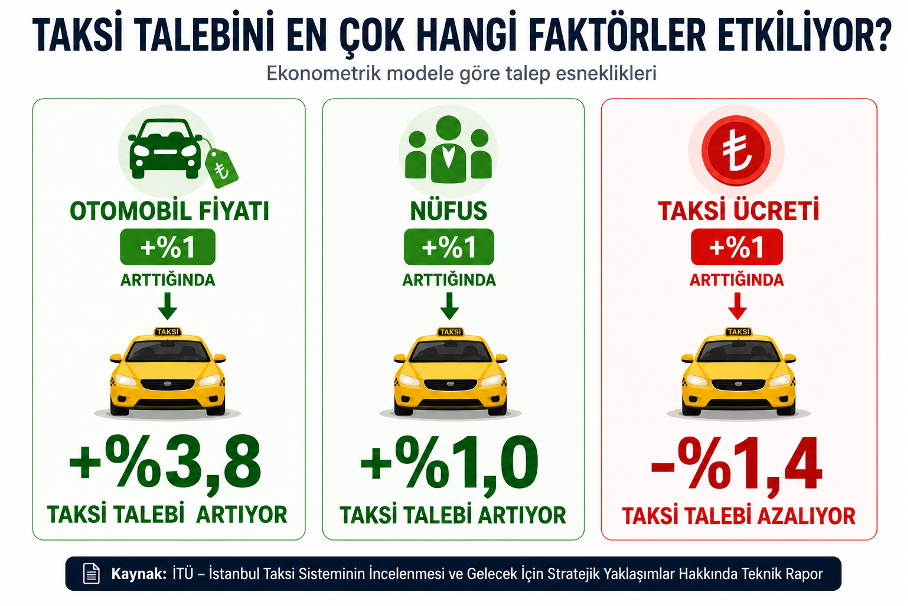
📌 Taxi Demand* Influencers:
🚗 1% increase in the price of automobiles can increase taxi demand by 3.8%.
👥 1% increase in the population increases the demand for taxis by about 1%.
💰 1% increase in taxi fare reduces demand by about 1.4%.
*According to the econometric model in the reports
📌 Influencing Taxi Supply : ✔️ Rail system length and prevalence
✔️ Public transportation fees and service level
✔️ Bus fleet and accessibility
✔️ Private vehicle ownership rate
✔️ Tourism density
✔️ Population density and spatial structure of the city……
❌Therefore, there is no answer to the question “how many taxis should there be?” on its own.
✅Instead; “What is the optimum taxi supply within the current transportation system? The question needs to be answered.