
🚗🚦 Why Is Traffic Locked These Days?
06/01/2026
🚗 An Analytical Approach to Istanbul Traffic: A Matter of Vehicle Size?
18/01/2026
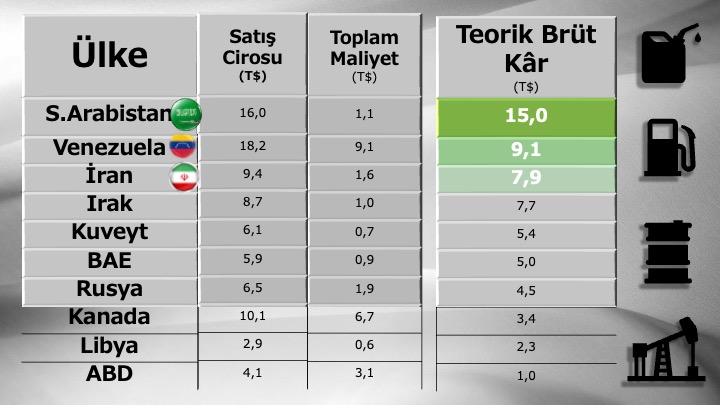
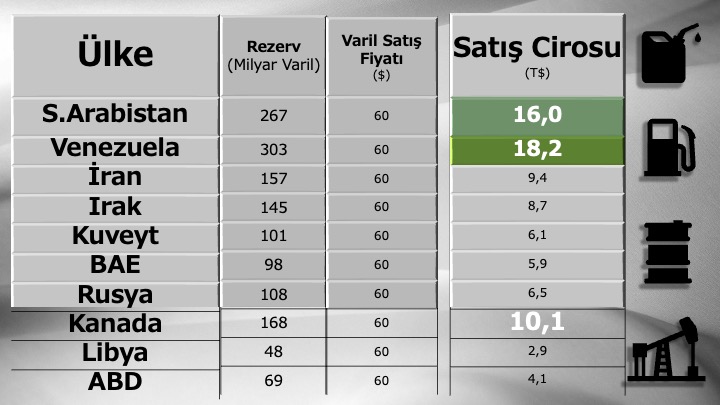
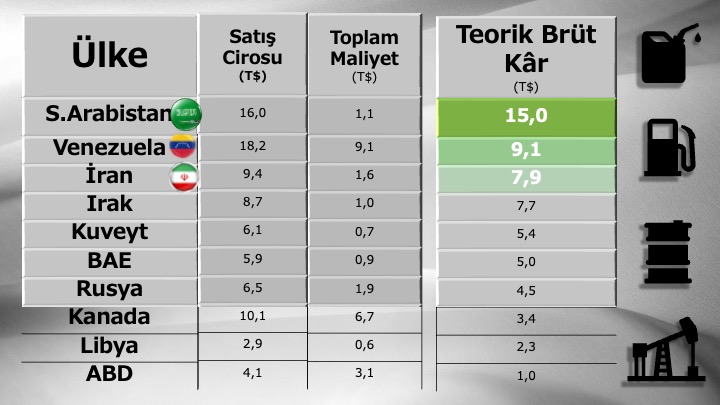
Who buys oil for how much and what does left in his pocket in the end?
The understandable table I have prepared clearly shows 👇the rules of the game
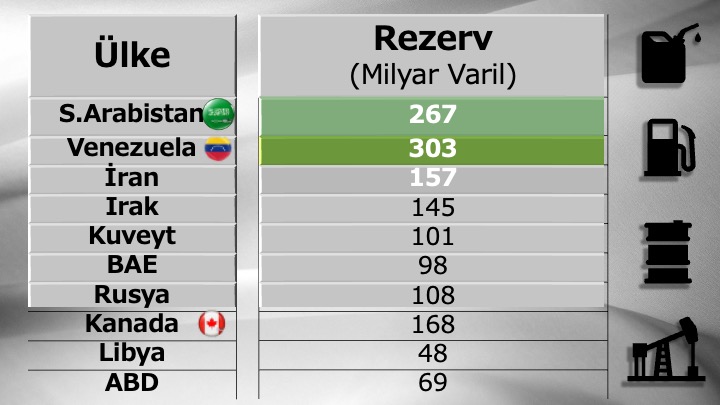
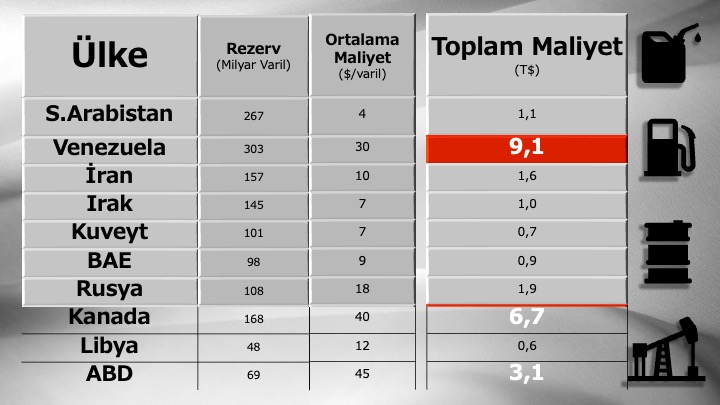
The table shows how much countries would earn if they deducted all their reserves[1] from their costs[2] and sold them at the current selling price (60 USD / barrel).
1️⃣ The reserve may be large, but the profit may remain
🛢️ Venezuela:
o It has one of the largest oil reserves in the world.
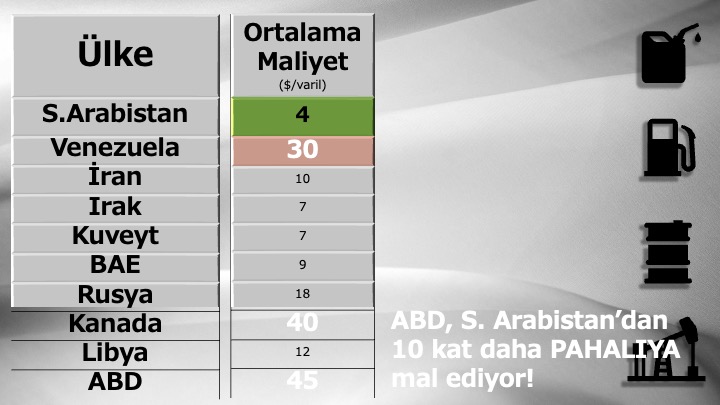
o However, there is a high production cost due to the fact that this oil is not easily processed.
🟢 Saudi Arabia:
o It has fewer reserves
o But it generates high net profit due to its much more easily processable oil reserves
📌 Because it is not the reserves that make the difference, but the cost.
2️⃣ Does the US want oil prices to fall?
🇺🇸 Most of the oil in the USA is shale oil.
💰 Average cost: 40–50 USD / barrel
What does this mean?
If the oil price falls below $45-50,
❌ the US producer will lose
❌ Production will fall
❌ Investment will stop
📌 Therefore, the US does not want oil prices to fall too much. This is a reflex to protect the domestic supplier.
3️⃣ Who benefits from this trade?
Of course, those who produce at very low cost.
🇸🇦 Production cost in Saudi Arabia:
👉 5–7 USD / barrel
While oil is 60 USD:
💸 The margin is huge
💸 Cash flow is very strong
📌 So unless the US wants to bring prices below a certain level, countries like Saudi Arabia naturally get richer.
✅ In the age of oil, the winners are not those who have the most oil, but those who can extract the oil the cheapest and influence the price equilibrium.
✅ In this equation, Venezuela is not a player at the table, but a playground.
✅In the current equations, the fact that military power is above political power actually creates invalid political borders and economic structures.
✅Only military and political troops will stand against the monopolization of power.
✅One of the peaceful compasses of the matter seems to be “technological developments”. However, since the widespread production technology is still dependent on underground resources, above-ground struggles will continue by jumping in size in this case.
[1] Kaynak: BP – Statistical Review of World Energy, OPEC – Annual Statistical Bulletin,EIA – International Energy Statistics
[2] Kaynak: IEA – World Energy Outlook, Rystad Energy – Global Upstream Cost Reports, Wood Mackenzie – Oil Supply Cost Curves, Goldman Sachs / JP Morgan – Energy Market Outlooks