
🚨 Let’s analyze an actual issue: The Big Misconception in the Oil World: It Saves Costs, Not Reserves!
17/01/2026
🚗📊 Invisible Competition in the Turkish Automotive Market: Sales Volume or Sales Stability?
19/01/2026
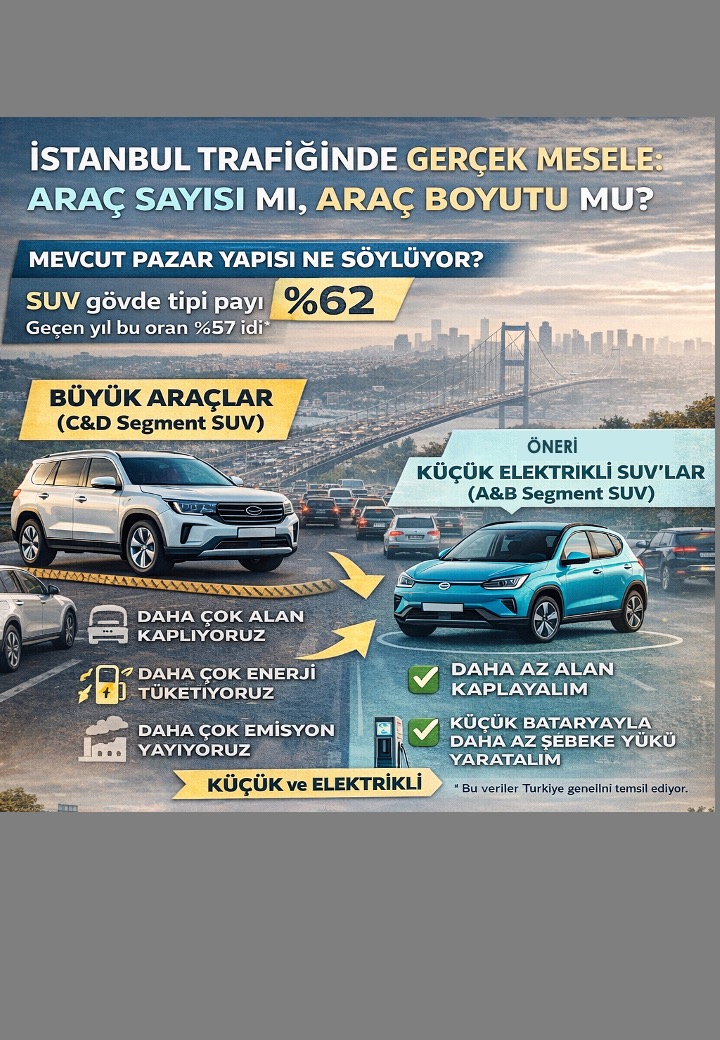
Traffic in Istanbul is often discussed in terms of the number of vehicles. However, one of the main determining variables on the field is the vehicle size.
1️⃣ What Does the Current Market Structure Say? SUV body type share is 62%. Last year : 57%*⃣ 2️”SUV” But which segment? SUV preferences are concentrated in large segments (C & B). Inside SUV Rate 81%. In other words, one out of every 2 vehicles sold in 2025 is a B/C SUV!! C-SUV: 55%, B-SUV: 26%, D-SUV: 16%, A-SUV: 1%, Other -SUV: 33️% ⃣ What does this mean on a city scale?
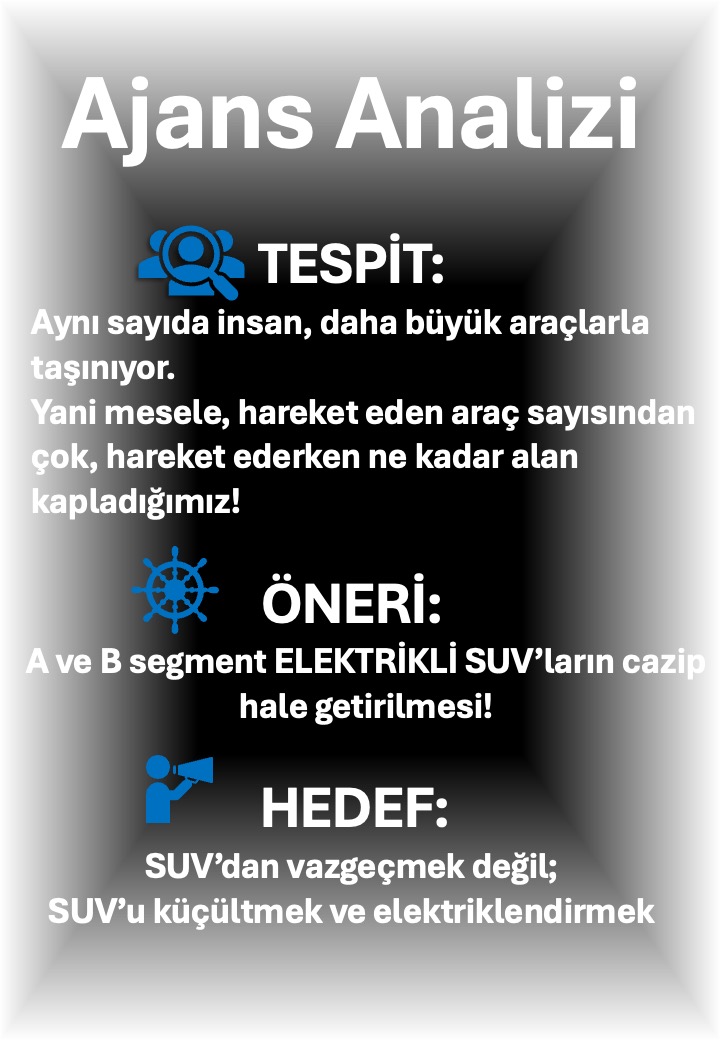
👤 The same number of people are transported by larger vehicles.
👥 So the issue is not so much the number of vehicles moving, but how much space we take up while moving.
⚠️ Strategic Summary
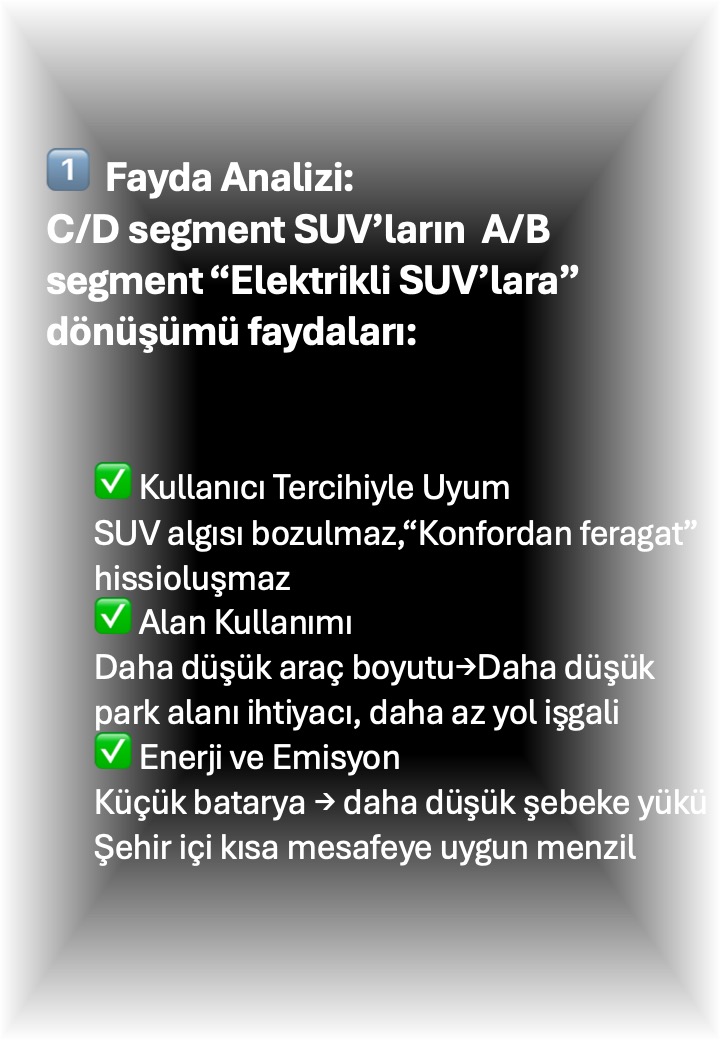
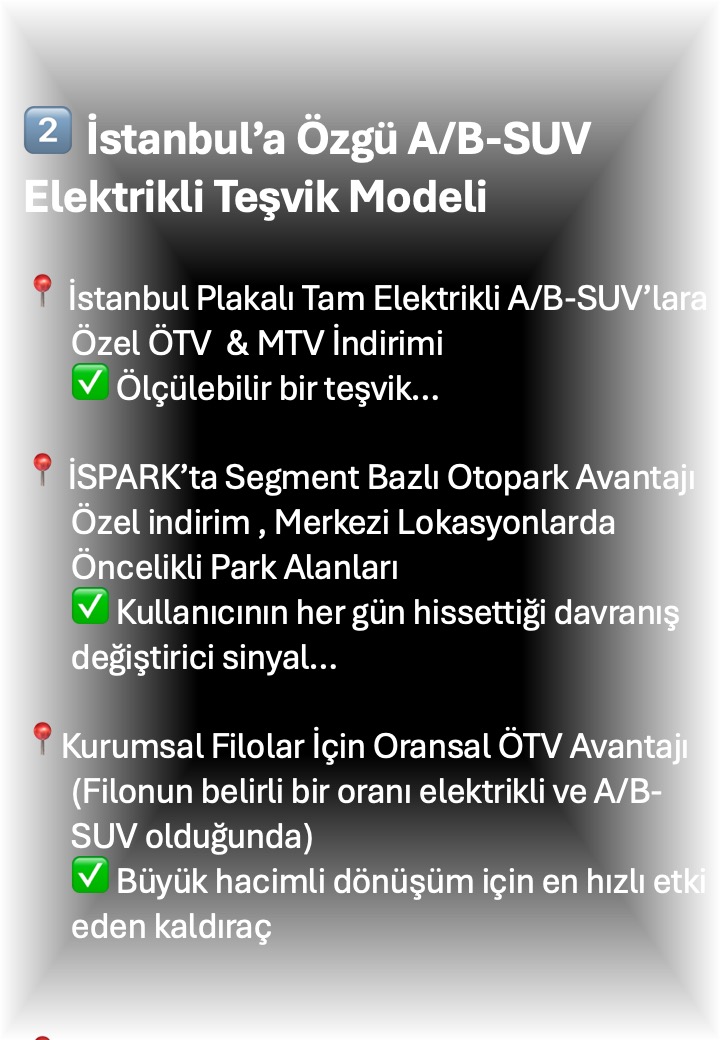
🔍 The right target for Istanbul can be with an A/B-SUV electric incentive model based on space and energy efficiency at the city scale.
🔍 The main strategy may not be to wait for the A-SUV, which has a very low supply to the market, but to make the existing B-SUV electric ecosystem attractive. 🔍 Behavioral change requires change of habits, accessibility and technological suitability. Let’s add the change of consciousness on top of these. In other words, “Why should I change? What will happen to me and society as a result of change?” and to answer those objectively.
📌 Data and Scope on which the Analysis is Based – This evaluation; Based on automobile sales data from January to December 2025, which was included in ODMD’s press release dated December 6, 2025. An important note: These data show the sales distribution throughout Turkey. Since there is no official segment-based breakdown in Istanbul, the analysis is based on the following reasonable assumption: The body and segment preferences observed throughout Turkey are seen becoming more evident in large metropolises – especially in Istanbul. Thus, this study is an automotive-oriented evaluation that aims to analyze the relationship between direction and size.