
🚗📊 Invisible Competition in the Turkish Automotive Market: Sales Volume or Sales Stability?
19/01/2026
🚗 Automobile Leader Changing in Turkey in 2026?
04/02/2026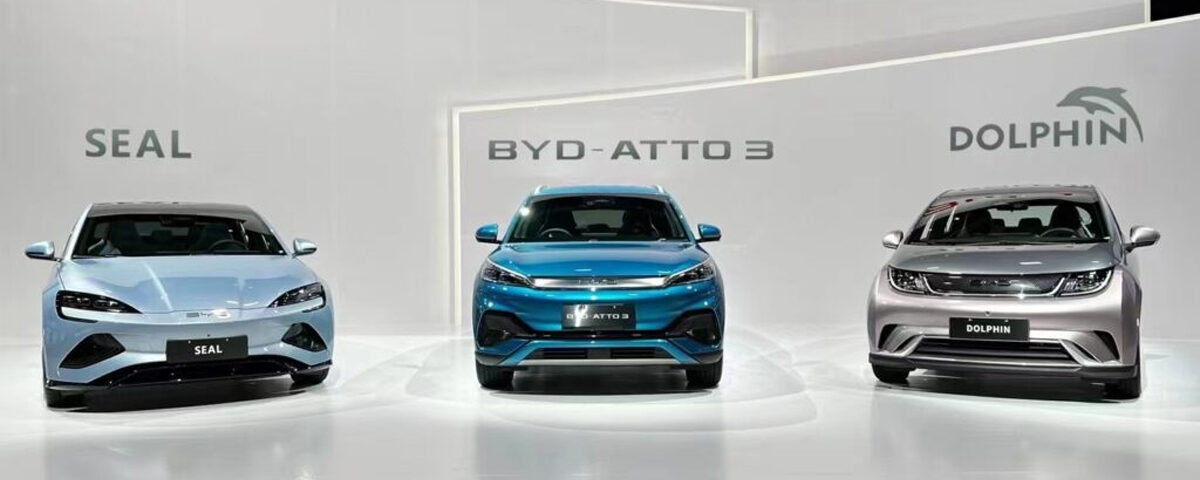
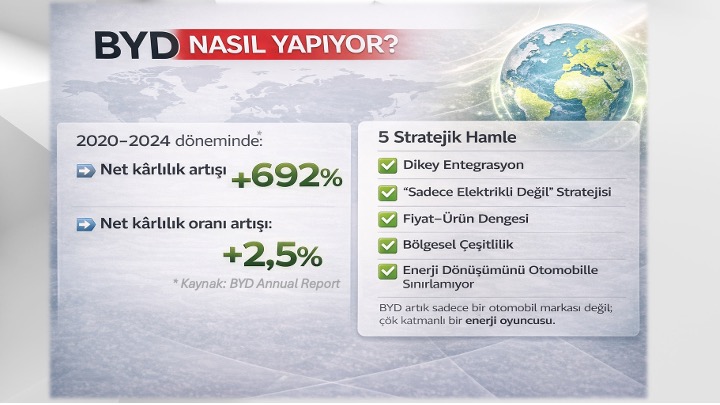
How is the transformation from an “automobile brand” to an energy technology player?
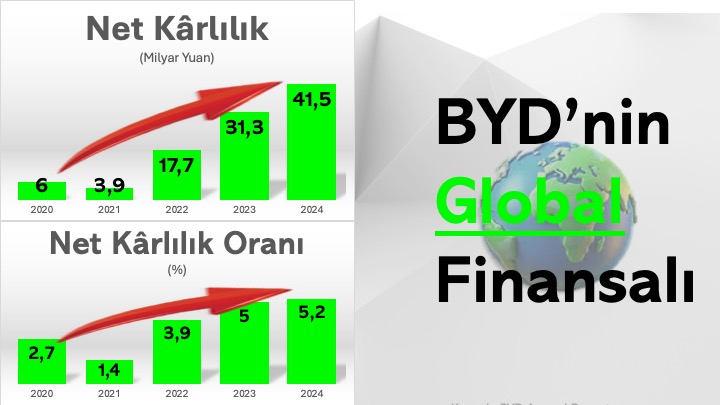
*BYD Annual Report 2024: https://www1.hkexnews.hk/listedco/listconews/sehk/2025/0324/2025032401238.pdf
1️⃣ Vertical Integration
✅How?: BYD develops most of the critical components in-house, from the battery to the power electronics, from the software to the motor.
📌Conclusion:
- Controlling costs
- Reduces supply chain risks
- Able to maintain margin while scale grows
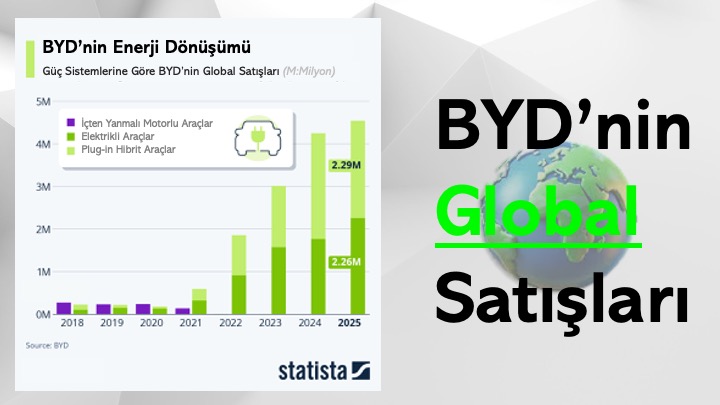
2️⃣ “NOT JUST ELECTRIC VEHICLE” Strategy
✅How?:
- Electric (BEV)
- Plug-in hibrit (PHEV)
It has a portfolio that grows different power systems simultaneously. (See. Attached table)
📌Conclusion:
This provides a serious advantage, especially in markets with immature infrastructure
3️⃣ Price-Product Balance
✅How?:
While BYD competes in the upper segment; It is also strong in the lower and middle segment.
📌Conclusion:
In other words: It breaks the perception of “electric vehicle = premium product”
4️⃣ Regional Diversity:
✅How
BYD is not basing growth on a single market.
📌Conclusion:
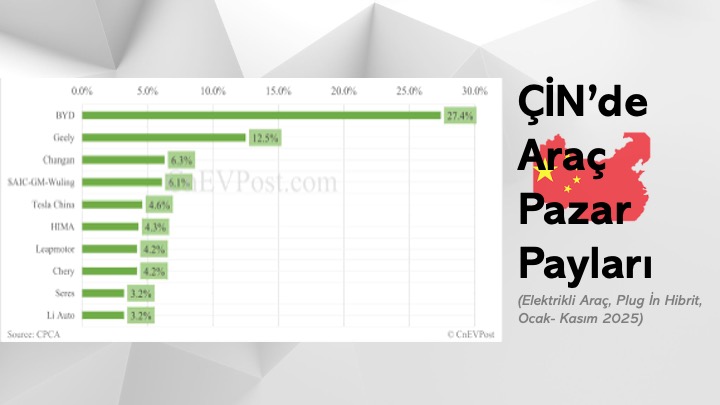
This creates a structure that is more resistant to fluctuations. As a priority, it gains stable economic and logistical power by dominating the domestic market.
5️⃣ Doesn’t Limit Energy Transition to Automobiles
✅ How?:
For BYD, it’s not just about selling vehicles:
- Battery technologies
- Energy storage systems
- Integrated energy solutions
📌Conclusion:
This perspective makes the company more of an energy technology player than a “car brand” .
⚠️ AGENCY ANALYSIS
The 2025 data tells us that BYD is no longer a “Chinese EV manufacturer” but a multi-layered global energy and mobility player.